Fresco History
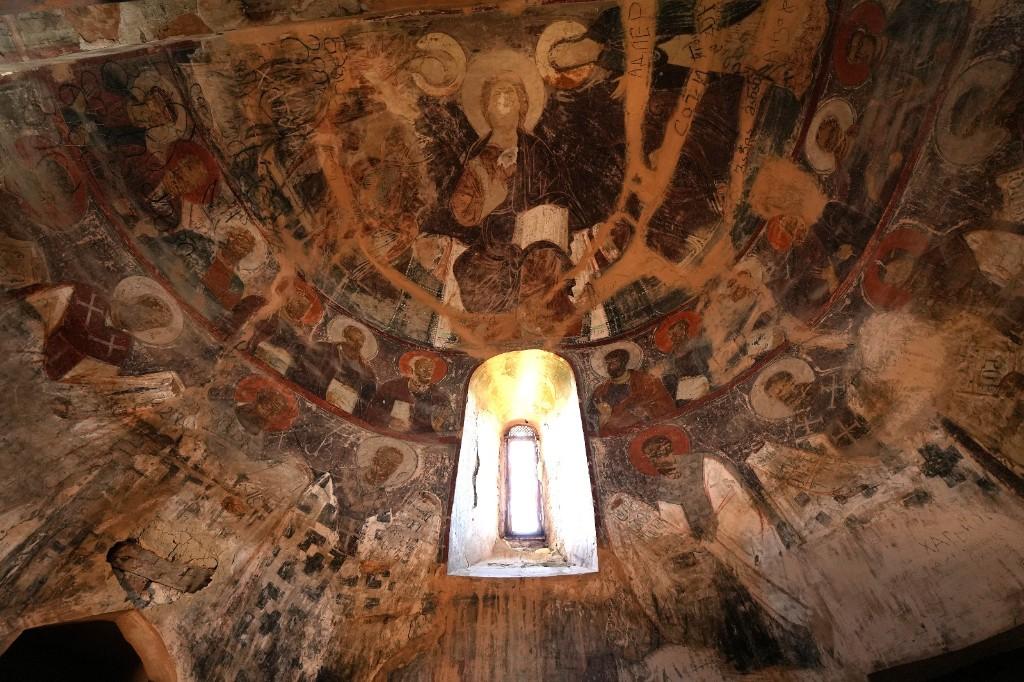
Georgian fresco painting constitutes one of the most significant chapters in the history of Georgian culture and Christian art. Fresco is a technique of wall painting in which pigments are applied to wet plaster. As the plaster dries, the pigments become integrated into its surface, forming a durable part of the wall itself.
Wall painting in Georgia developed following the spread of Christianity. Important surviving examples of early Georgian wall painting date from as early as the 7th century. Among them are the mosaic decorating the sanctuary of the Tsromi Church, dating to the beginning of the 7th century, and fragments of the 8th-9th-century wall paintings of the Telovani Church.
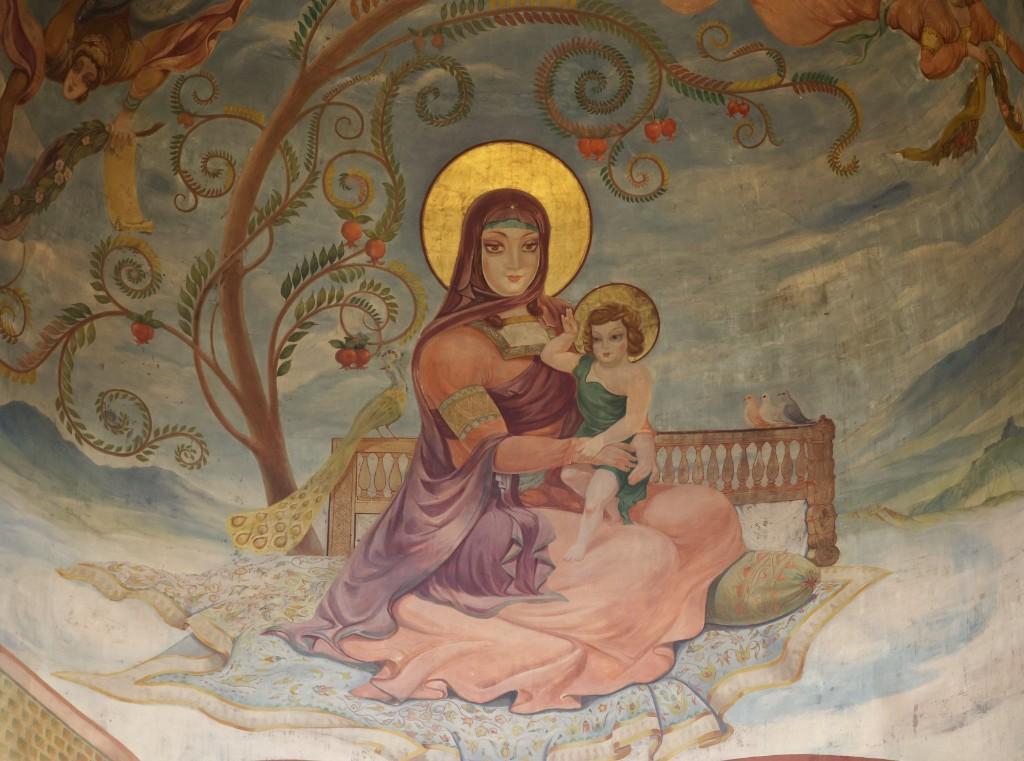
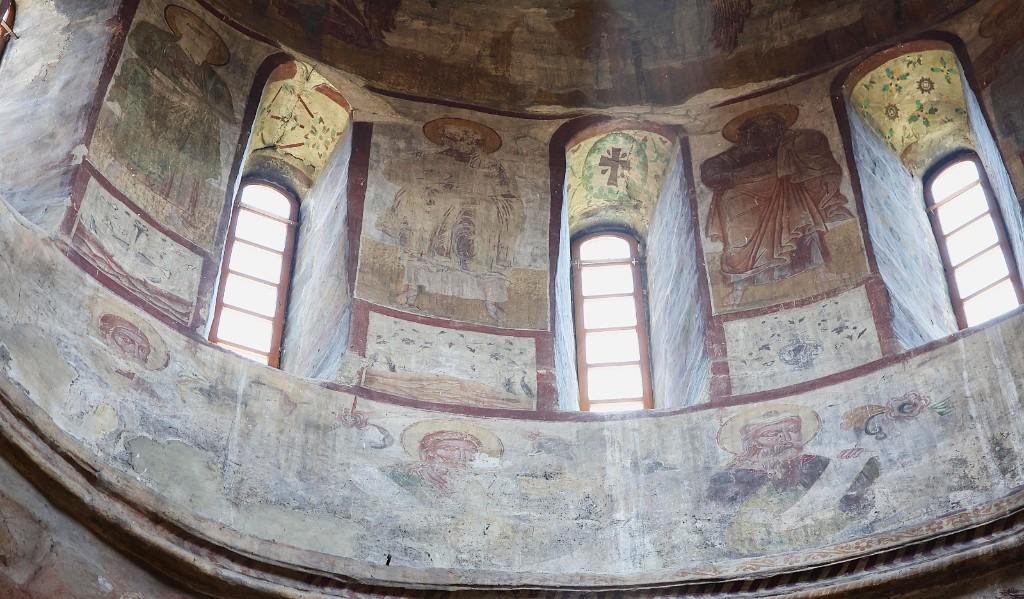
The creation of a Georgian fresco involved several stage:
- The wall surface was first prepared and covered with plaster. The artist then worked directly on the still-wet surface, using pigments to create the composition. Paints were prepared from naturally occurring pigments.
Since the artist had to work while the plaster was still wet, fresco painting required speed, precision, and careful planning. As Georgian wall painting evolved, so too did its techniques, color palettes, and artistic approaches.
Georgian frescoes and wall paintings predominantly depict Jesus Christ, scenes from the life of Christ, the Virgin Mary, saints, and biblical narratives. Representations of Georgian kings, ktetors, and founders or patrons of churches can also be found.
The influence of Byzantine art on Georgian fresco painting is evident; however, Georgian artists developed a distinctive artistic language of their own based on these influences. Wall paintings from different periods vary considerably in style, color palette, and artistic technique. Georgian painted ensembles of the 12th–13th centuries, for example, are distinguished by refined drawing, delicate modelling of forms, lyrical expressiveness, and a particularly resonant use of colour.
Georgian frescoes are notable for the expressive faces and emotional presence of their figures. Artists paid particular attention to the gaze, facial features, and the representation of the spiritual state of their subjects. This sensitivity to psychological and spiritual expression may be regarded as one of the defining artistic characteristics of Georgian wall painting.
Georgian wall paintings frequently incorporate traditional Georgian ornamental motifs and inscriptions. Particularly significant are inscriptions in the Asomtavruli script, which identify and explain depicted figures and scenes while further emphasizing the distinctive cultural identity of Georgian wall painting.
Frescoes are not merely works of art; they are also valuable historical sources. They provide important evidence about the clothing, social and royal life, religious beliefs, and cultural traditions of their respective periods. They also make it possible to trace the different stages in the development of Georgian art and to better understand the cultural environment in which these works were created.
Numerous significant examples of Georgian wall painting have survived to the present day and constitute some of the most important monuments of Georgia’s cultural heritage. They offer an opportunity to explore the centuries-long development of Georgian art, its distinctive artistic characteristics, and the cultural contexts of different historical periods.
References
- • Wall Painting - Georgian National Encyclopedia
- • Ancient Georgian Wall Painting - Tbilisi State University
- • Publications - George Chubinashvili National Research Centre for Georgian Art History and Heritage Preservation