22
Monasteries
Samtavro Monastery of St. Nino
Samtavro Monastery of Saint Nino,
Building type: Cross-dome church
Mtskheta-Mtianeti Region
Frescoes
35At this place
Other churches and buildings in this same complex
Architectural Monument
39Region
Mtskheta-Mtianeti
Category
Monasteries
History
Samtavro Monastery
Located in the historic part of Mtskheta, Samtavro Monastery is one of Georgia’s oldest ecclesiastical and cultural monuments.
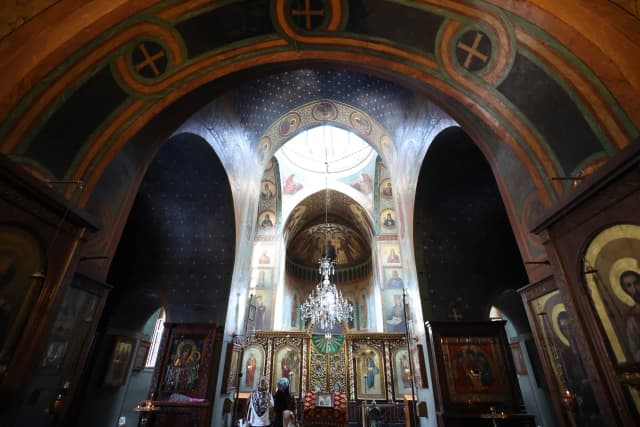
Today, Samtavro is an active convent. The complex includes the main church — the Church of the Transfiguration of the Savior, the small Church of St. Nino, a bell tower, a fortified enclosure, and other buildings.
The history of the Samtavro site is closely associated with the Christianization of Georgia. According to tradition, St. Nino lived and preached Christianity here in the 4th century.
The earliest layer of the small church located within the Samtavro complex dates back to the 4th century. Its connection with St. Nino remains one of the main reasons why the monastery continues to attract pilgrims and visitors.
The main building of Samtavro - the Church of the Transfiguration of the Savior — was constructed in the early 11th century. Its construction is associated with the reign of King George I and the ecclesiastical activities of Catholicos-Patriarch Melchizedek I.
One of the most significant features of the main church is the tombs of King Mirian III and Queen Nana.
Throughout its history, the Samtavro church was damaged and restored several times. As a result, its present appearance reflects architectural layers dating from different periods.
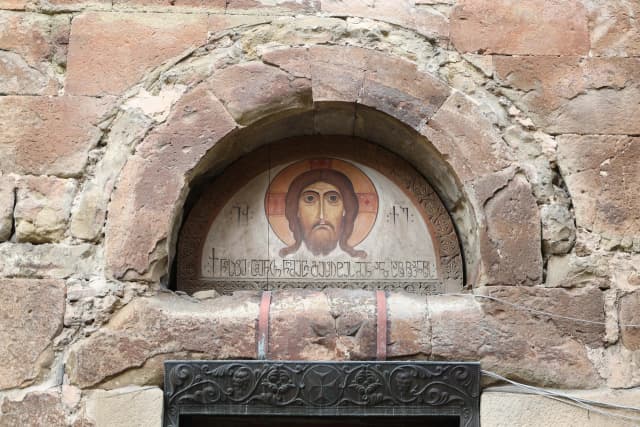
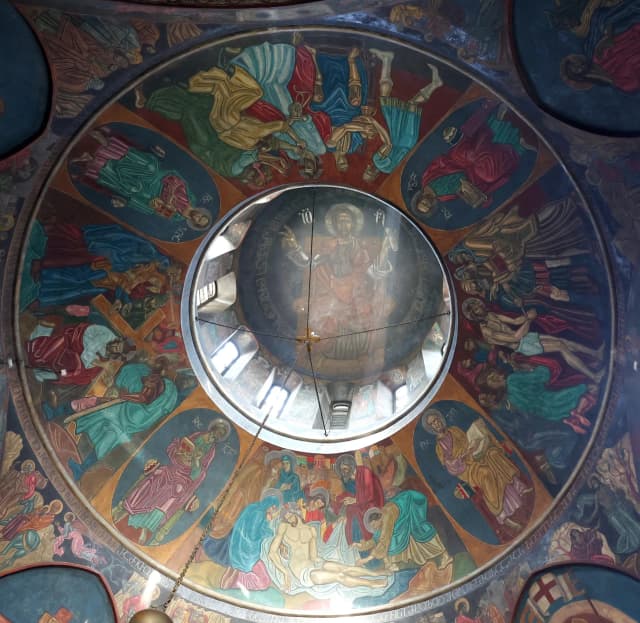
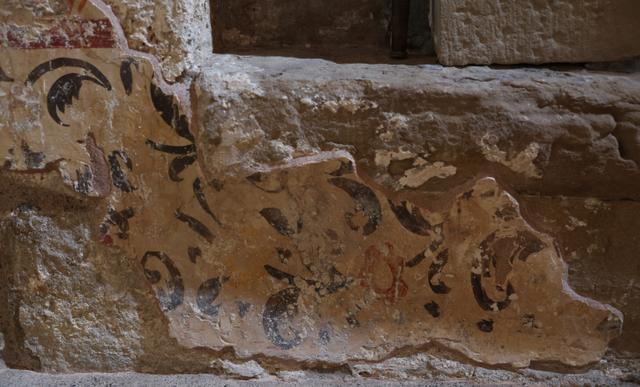
Fragments of 17th-century frescoes have survived in the sanctuary and dome of the Church of the Transfiguration. Much of the original composition in the apse conch has been lost. In the first register, only part of the throne, the feet of Christ, and the footstool remain visible, while the second register depicts figures of the Apostles.
Fragments of a depiction of Christ are preserved in the dome. Around it, the symbols of the Evangelists are placed within medallions. The sections between the dome windows are decorated with figures of the twelve prophets arranged in two registers, accompanied by ornamental motifs.
Next to the main church stands the small Church of St. Nino. Its earliest layer dates back to the 4th century, and the history of the church is closely associated with St. Nino’s activities. The church also preserves frescoes depicting scenes from the life of St. Nino, dating to the beginning of the 19th century. Their author is unknown.
The bell tower within the Samtavro complex dates to the 15th–16th centuries. The monastery is also surrounded by a fortified enclosure, which was renovated later, in the 19th century. The buildings of the complex date from different periods, making Samtavro’s architectural history particularly rich and layered.
Samtavro Monastery is also the burial place of St. Gabriel the Confessor and Fool-for-Christ (Gabriel Urgebadze), one of the most renowned Georgian religious figures of the 20th century.
Historical Sources
Historical Timeline
IV
King Mirian III built the first church.
The 1030s of the 11th century
The main building of the Samtavro complex - the Church of the Transfiguration of the Savior - was built.
1283 AD
As a result of a powerful earthquake, the dome of the Church of the Transfiguration collapsed.
The turn of the 13th and 14th centuries.
The dome of the Church of the Transfiguration was restored.
XV–XVI
The bell tower within the Samtavro complex was built.
You May Also Like
Anchiskhati Basilica of St. Mary
7 Shavteli Street, Kala, Ortachala, Krtsanisi District, Tbilisi, 0108, Georgia
Old Holy Trinity Church
6 Erosi Manjgaladze Street, Kaloubani, Tbilisi 0108, Georgia.
Didube Church of Mother of the God
42 Akaki Tsereteli Ave, Tbilisi 0154
Zedazeni Monastery
Saguramo, Mtskheta Municipality, Mtskheta-Mtianeti, 3300, Georgia
Upper Bethlehem Church of the Nativity of the Savior
18 Betlemi Rise, Tbilisi
Kaloubani St. George Church
Kaloubani Church of Saint George, Zahesi — Mtskheta — Kavtiskhevi — Gori — Skra — Kareli — Osiauri, Mtskheta, Mtskheta Municipality, Mtskheta-Mtianeti, 3300, Georgia
Mtatsminda Father David Church
Mama Daviti Rise, Mtatsminda, Sololaki, Mtatsminda District, Tbilisi, 0108, Georgia
Saint Nicholas Church at Narikala
Narikala, Gomi 1st Lane, Betlemi, Kala, Ortachala, Krtsanisi District, Tbilisi, 0108, Georgia