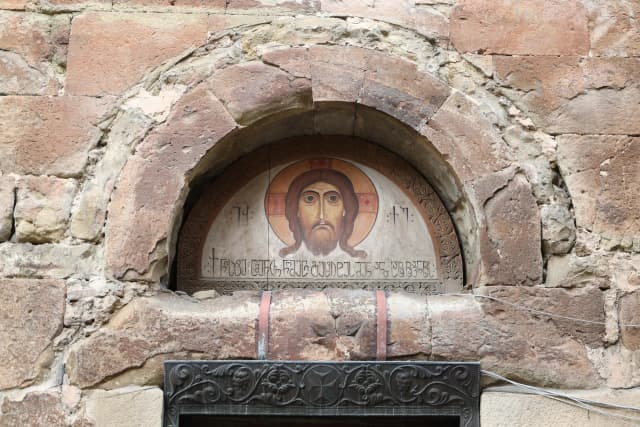
დასავლეთის კარიბჭე 1991 წელს აშენდა, მოხატულია მხატვარ მამუკა მიქელაძის მიერ.
10
9 Shota Rustaveli Ave
Building type: Cross-dome church
Tbilisi Region
Frescoes
52Architectural Details
26History
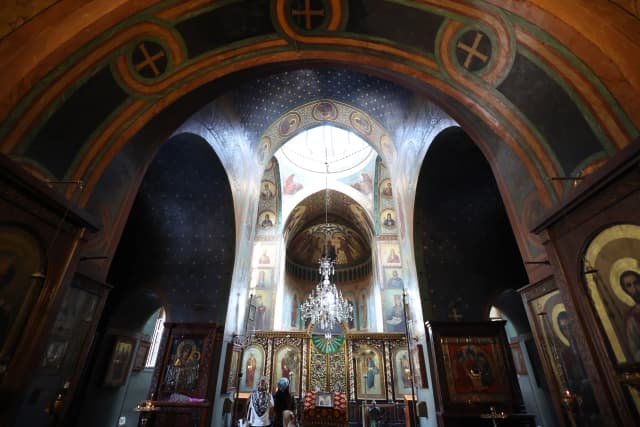
Kashveti Church of St. George is one of the most distinguished monuments of Georgian architecture. Its history spans centuries and brings together religious tradition, Georgian architecture and art. The walls of Kashveti preserve unique frescoes by Lado Gudiashvili - an important example of Georgian monumental painting.
The history of Kashveti dates back to the 6th century and is closely associated with one of the Assyrian Fathers, Saint David of Gareja. It was during his period of religious activity that the first church was established on this site.
The ancient church was damaged over time, and in the 18th century a new brick church was built on its site. By the end of the 19th century, however, this church had also fallen into disrepair, and the construction of a new church was decided upon.
Construction of the present church began in 1904 and was completed in 1910. The project was designed by the architect Leopold Bilfeld, a German architect who worked in Georgia, who chose the 11th-century Samtavisi Cathedral as his model. As a result, the architecture of Kashveti clearly reflects the influence of medieval Georgian ecclesiastical architecture.
The facades of the church are richly adorned with carved ornamentation, inspired by motifs from the decorative traditions of various historic churches in Georgia.
The western porch of Kashveti Church of St. George was built in 1991 according to a design by architect Irakli Mosulishvili. The paintings in the porch were executed by the artist Mamuka Mikeladze in 2009.
Historical Sources
Georgian Soviet Encyclopedia, Vol. X, Tbilisi, 1986.
Georgia Travel - Kashveti Church
Travel in Georgia - Kashveti Church
National Agency for Cultural Heritage Preservation of Georgia - Kashveti Church
National Parliamentary Library of Georgia - Kashveti
Digital Library of the National Parliamentary Library of Georgia - St. George’s Church of Kashveti
Interesting Facts
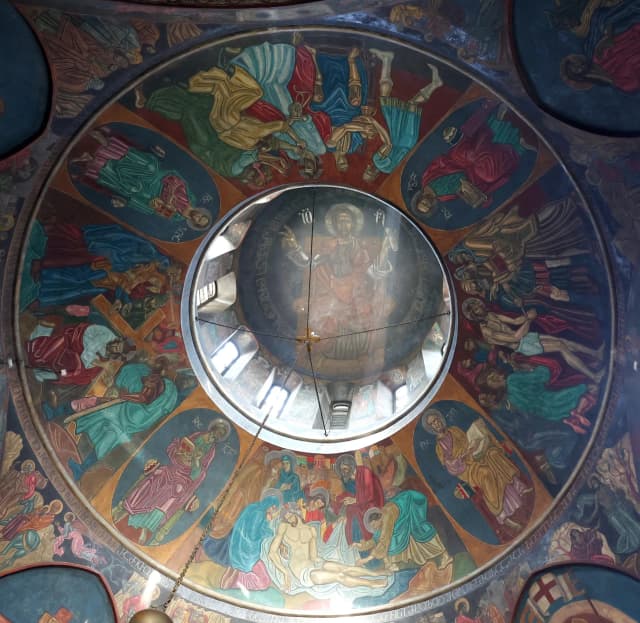
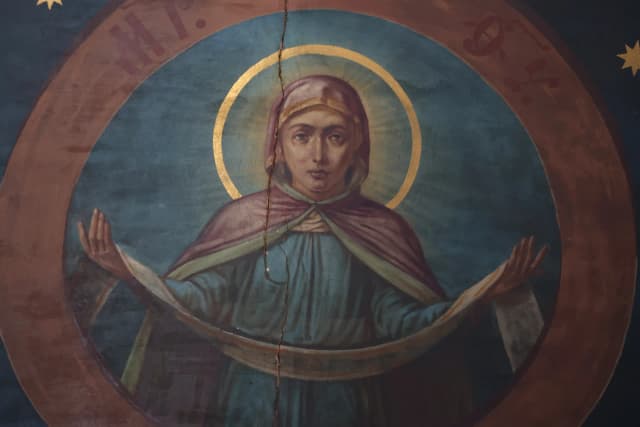
One of the most significant features of Kashveti Church is its wall paintings, created by the renowned Georgian artist Lado Gudiashvili.
In 1946, Catholicos-Patriarch of Georgia Kalistrate Tsintsadze invited Gudiashvili to paint the church. The artist accepted the challenge with a great sense of responsibility, as he was expected to create a work that would preserve ecclesiastical tradition while also expressing his individual artistic vision. The work was completed in 1948.
In the apse of the church’s sanctuary, the Virgin Mary with the Christ Child is depicted in the Garden of Eden, accompanied by angels. The walls of the apse feature the Communion of the Apostles, while the arch depicts a symbol of the Holy Spirit and the acheiropoietic icon. These frescoes constitute the only large-scale area of colour in the church interior, creating a distinctive visual accent against the white walls.
Gudiashvili’s painting differs from traditional Byzantine austerity. His works reflect the influence of Georgian Modernism, with soft colours, dynamic compositions and faces filled with human emotion. The saints are portrayed here not only as embodiments of spiritual elevation, but also with an inner warmth and vitality.
It is particularly noteworthy that the artist executed the paintings using the complex encaustic technique. This ancient method was used as early as ancient Egypt, Greece and Rome and required considerable artistic skill.
Initially, Gudiashvili’s frescoes were also the subject of some controversy, as some members of the clergy considered them overly modern and unconventional. Over time, however, these works came to be regarded as one of the finest examples of Georgian ecclesiastical art, and today Kashveti Church is renowned in part for its unique wall paintings.
At this place
Other churches and buildings in this same complex
You May Also Like
Anchiskhati Basilica of St Mary
Shavteli Street, Kala, Ortachala, Krtsanisi District, Tbilisi, 0108, Georgia
Old Holy Trinity Church
Grigol Abashidze Street, Garetubani, Mtatsminda, Sololaki, Mtatsminda District, Tbilisi, 0108, Georgia
Didube Church of Mother of the God
Didube Pantheon, Didube, Didube District, Tbilisi, Georgia
Mtatsminda Father David Church
Mama Daviti Rise, Mtatsminda, Sololaki, Mtatsminda District, Tbilisi, 0108, Georgia
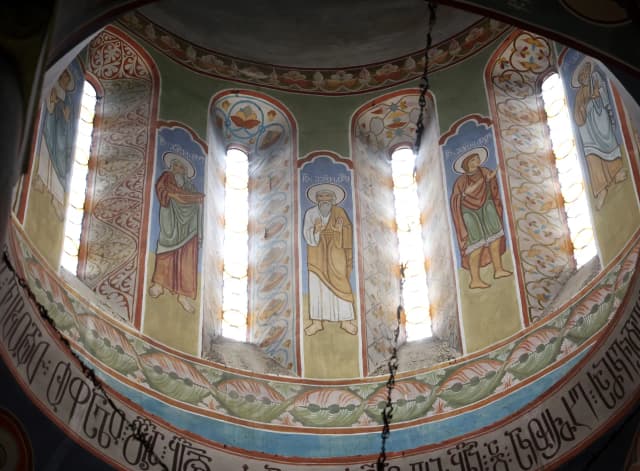
Saint Nicholas Church in Narikala
Narikala, Gomi 1st Lane, Betlemi, Kala, Ortachala, Krtsanisi District, Tbilisi, 0108, Georgia
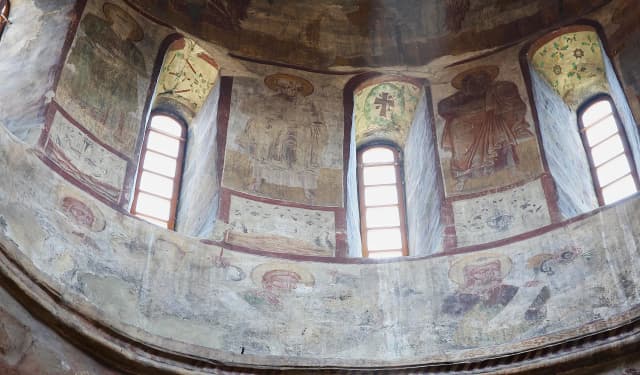
Samtavro Monastery of St. Nino
Samtavro Monastery of Saint Nino, Mirian Mepe Street, Mtskheta, Mtskheta Municipality, Mtskheta-Mtianeti, 3311, Georgia
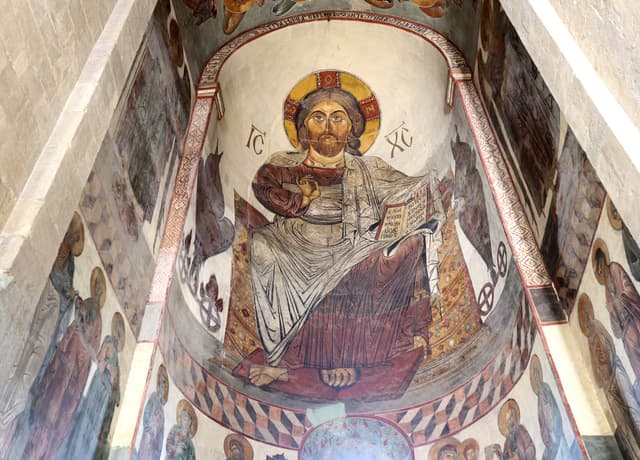
Svetitskhoveli Cathedral
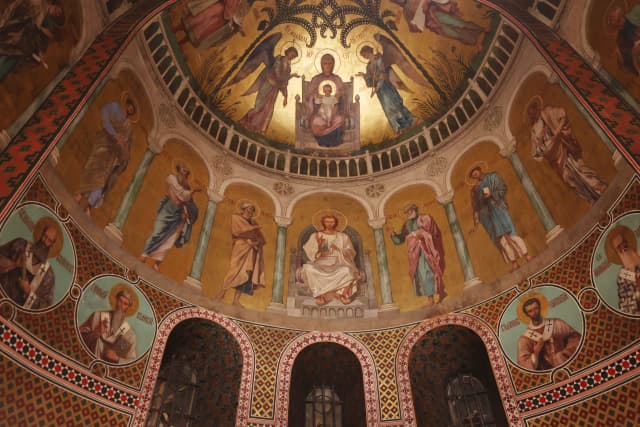
Cathedral of Saint Mary of Zion
სიონი