Church of St. John the Baptist
42Monasteries
Shiomgvime Monastery
Monastery of Shiomghvime,
Mtskheta-Mtianeti Region
Frescoes
70At this place
Other churches and buildings in this same complex
Refectory
17The Tomb of St. Shio of Mgvime
03Architectural Monument
09Region
Mtskheta-Mtianeti
Category
Monasteries
History
Shio-Mgvime Monastery is located near Mtskheta, on the right bank of the Mtkvari River, in the rocky gorge of Sarkineti. It was founded in the 6th century by one of the Thirteen Assyrian Fathers, Saint Shio Mgvimeli, who came to Georgia together with Saint John of Zedazeni. According to tradition, Saint Shio spent the last 15 years of his life in solitude in a cave, where he was also buried. Over time, a monastery developed around him, becoming one of Georgia’s important religious and cultural centres during the Middle Ages.
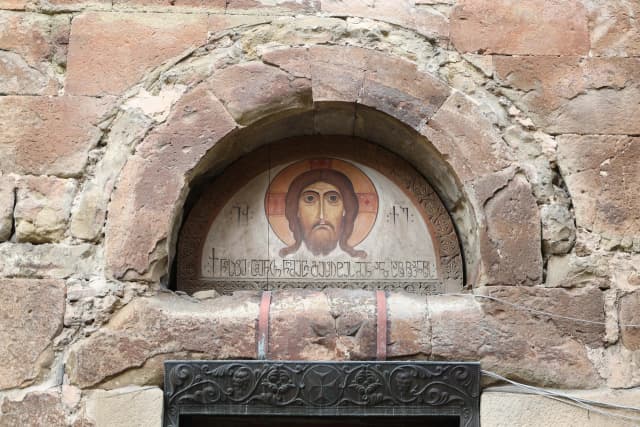
The oldest surviving structure within the complex is the Church of Saint John the Baptist, dating to the second half of the 6th century. The monastery was subsequently expanded, and additional structures were built. In the 12th century, during the reign of David the Builder, the large domed Church of the Dormition of the Mother of God was constructed. The remains of a refectory and other monastic buildings can also be found within the monastery complex.
The monks’ living quarters consisted of caves carved into the rock and arranged according to a particular system. The caves were interconnected by tunnels and balcony-like passages, which have since collapsed. The lower caves were accessed via vertical tunnels and wooden ladders.
Over the centuries, Shio-Mgvime Monastery was repeatedly damaged as a result of invasions. Particularly devastating were the invasions of the early 17th century. Shah Abbas’s invasion destroyed the domed Church of the Dormition of the Mother of God, which was restored in 1678 by Givi Amilakhvari and his wife, Tamar. Restoration works continued in the 18th century, while in the 19th century Bishop Alexander Okropiridze played an important role in the renewal of the monastery.
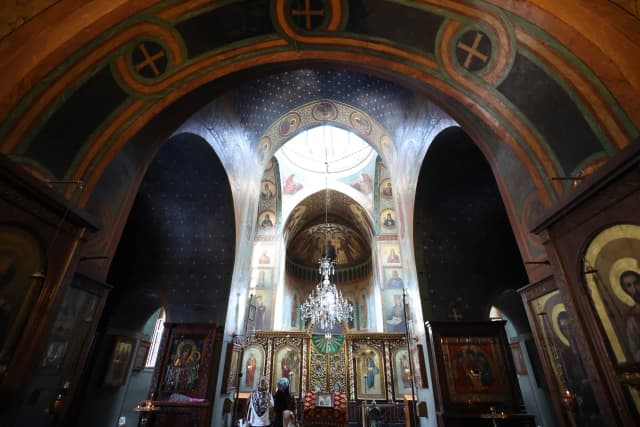
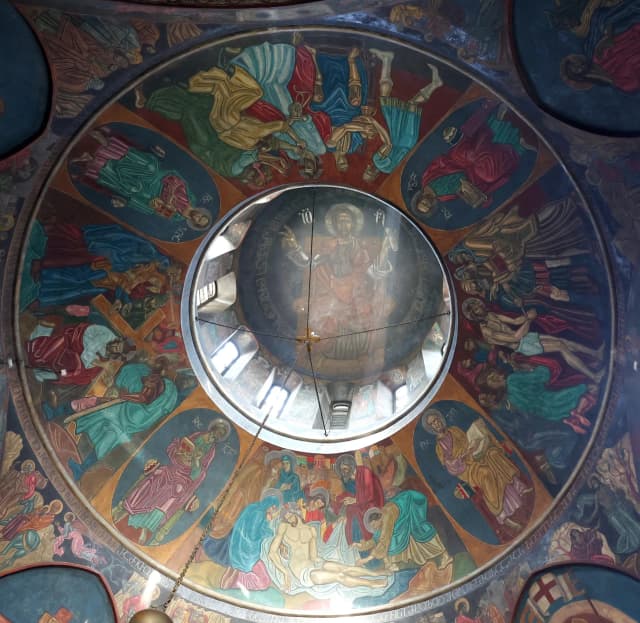
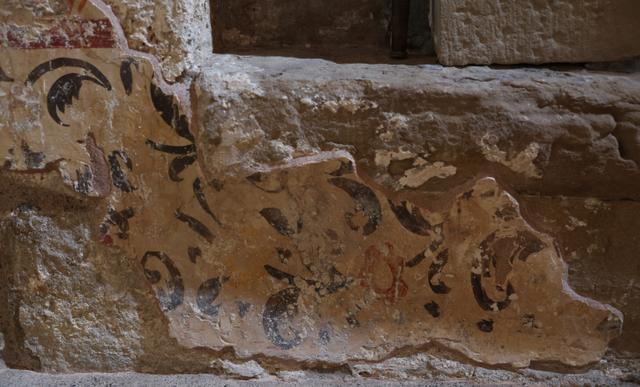
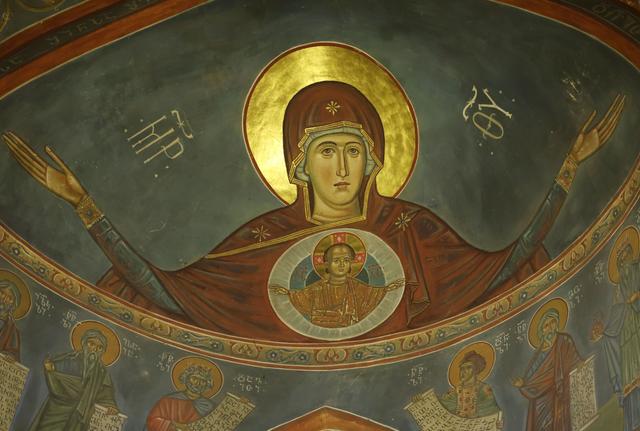
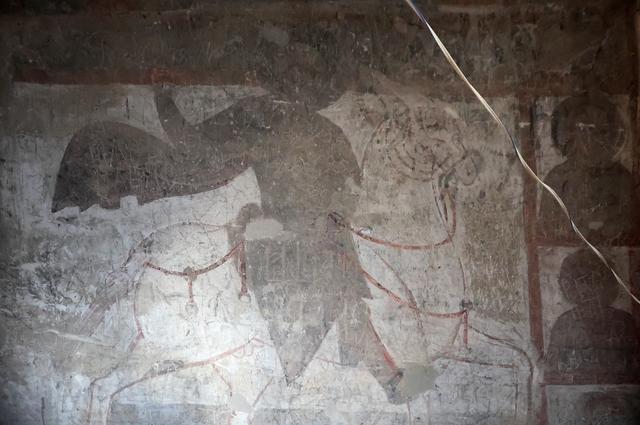
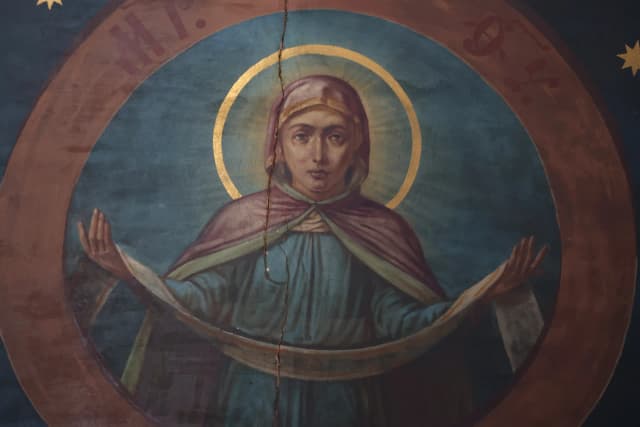
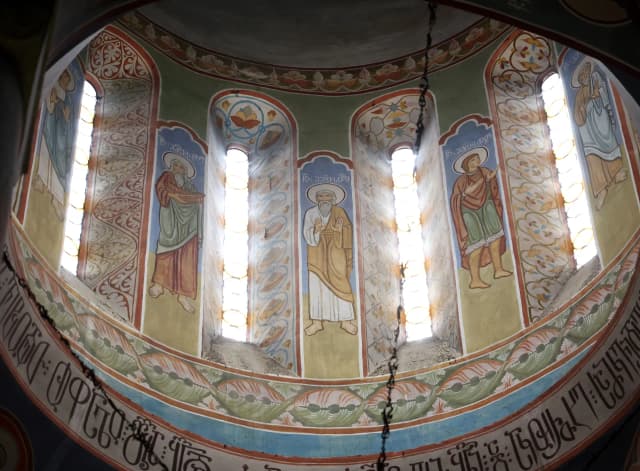
The wall paintings of the monastery belong to different periods. The interiors of the churches of Saint John the Baptist and the Dormition of the Mother of God were painted in 1901–1903 by the Russian artist Nikolai Andreev, commissioned by Bishop Leonid. Of particular interest within the complex is the Church of the Exaltation of the Holy Cross, whose walls preserve fragments of 12th - 13th-centuries frescoes. They represent an important part of the monastery’s medieval artistic heritage.
Today, Shio-Mgvime is a monument of exceptional historical, architectural, and spiritual significance. Its churches set within the rocky gorge, the cave of Saint Shio, and its centuries-old monastic environment make the complex one of the distinguished monuments of Georgia’s cultural heritage.
Historical Sources
7
|
Precipitation: 0%
Humidity: 73%
Wind: 11 km/h
Weather
Tuesday 13:30
Partly Cloudy
Location
Historical Timeline
VI
The Church of St. John the Baptist was founded by the Assyrian Father St. Shio of Mgvime.
XII
During the reign of King David IV the Builder, the domed Church of the Dormition of the Virgin Mary was constructed.
XII
The Church of the Exaltation of the Holy Cross was built.
XVII
The Shah Abbas invasion damaged the monastic complex.
In 1678.
The Church of the Dormition of the Virgin Mary was restored by Givi Amilakhvari and his wife, Tamar.
XIX
Bishop Aleksandre Okropiridze made a significant contribution to the restoration of the monastery.
You May Also Like
Anchiskhati Basilica of St. Mary
7 Shavteli Street, Kala, Ortachala, Krtsanisi District, Tbilisi, 0108, Georgia
Old Holy Trinity Church
6 Erosi Manjgaladze Street, Kaloubani, Tbilisi 0108, Georgia.
Didube Church of Mother of the God
42 Akaki Tsereteli Ave, Tbilisi 0154
Zedazeni Monastery
Saguramo, Mtskheta Municipality, Mtskheta-Mtianeti, 3300, Georgia
Upper Bethlehem Church of the Nativity of the Savior
18 Betlemi Rise, Tbilisi
Kaloubani St. George Church
Kaloubani Church of Saint George, Zahesi — Mtskheta — Kavtiskhevi — Gori — Skra — Kareli — Osiauri, Mtskheta, Mtskheta Municipality, Mtskheta-Mtianeti, 3300, Georgia
Mtatsminda Father David Church
Mama Daviti Rise, Mtatsminda, Sololaki, Mtatsminda District, Tbilisi, 0108, Georgia
Saint Nicholas Church at Narikala
Narikala, Gomi 1st Lane, Betlemi, Kala, Ortachala, Krtsanisi District, Tbilisi, 0108, Georgia