Svetitskhoveli Cathedral
Building type: Cross-dome church
Mtskheta-Mtianeti Region
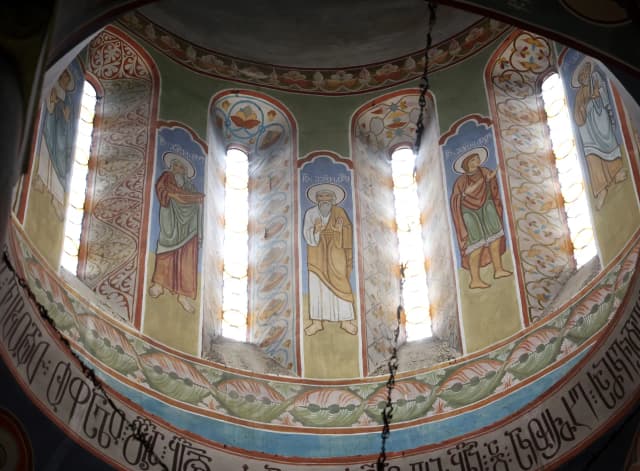
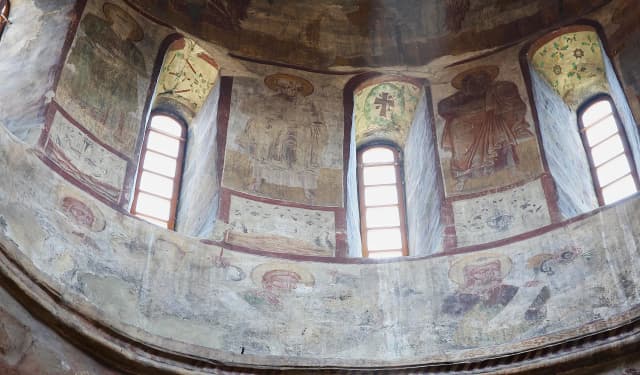
Frescoes
109Architectural Details
87History
Svetitskhoveli, a monument of Georgian architecture dating to the 11th century, is the principal patriarchal cathedral of the Georgian Orthodox Church and the seat of the enthronement of the Catholicos-Patriarchs of Georgia.
According to tradition, the first wooden church was built on the site in the 4th century by King Mirian, following the advice of Saint Nino, at the place where the Robe of Christ was believed to have been buried. The church was destroyed soon afterwards. During the reign of King Vakhtang Gorgasali, in the second half of the 5th century, a basilica was built on the same site. In the 11th century, Catholicos of Kartli Melchizedek commissioned a new cathedral on the site of the damaged basilica. The architect of the cathedral was Arsukisdze. Construction began in 1010 and was completed in 1029.
Over the centuries, Svetitskhoveli was repeatedly damaged by earthquakes and enemy invasions. At different times, its restoration was undertaken by King George VI the Brilliant, King Alexander the Great, King Rostom, and other secular and ecclesiastical figures.
The interior of Svetitskhoveli preserves traces of wall paintings from different periods. The cathedral was originally painted in the 11th century, although only small fragments of the frescoes from this period have survived to the present day. Particularly noteworthy are the 17th-century wall paintings commissioned under Catholicos Nikoloz Amilakhvari. The same period saw the creation of the richly painted interior of the small structure known as “Svetitskhoveli,” located inside the cathedral, which was painted by Grigol Guljavarashvili between 1678 and 1688. In addition to biblical scenes, the frescoes depict important events associated with the spread of Christianity in Kartli, giving the paintings of Svetitskhoveli not only religious but also historical significance.
For centuries, Svetitskhoveli was one of Georgia’s most important spiritual and royal centres. Kings of Georgia from different periods and members of the royal family are buried within the cathedral.
In 1994, Svetitskhoveli, together with Jvari and Samtavro Monasteries, was inscribed on the UNESCO World Heritage List as part of the “Historical Monuments of Mtskheta.”
Historical Sources
UNESCO — Historical Monuments of Mtskheta
NPLG — სვეტიცხოვლის ფრესკების ბიბლიოგრაფია
https://www.orthodoxy.ge/eklesiebi/svetitskhoveli/svetitskhoveli.htm
Interesting Facts
The history of Svetitskhoveli is closely associated with the Robe of Christ and the miraculous tree that grew at the site where it was buried.
According to tradition, Elioz of Mtskheta witnessed the Crucifixion of Christ. He received the Lord’s Robe by lot and brought it to Mtskheta. His sister Sidonia met him at the city gates, took the Robe into her arms, and died from overwhelming joy and emotion. No one was able to take the Robe from Sidonia’s hands, and she was therefore buried with it.
According to tradition, a cypress tree grew from Sidonia’s grave. In the 4th century, when Christianity spread throughout Kartli through the preaching of Saint Nino, King Mirian decided to build the first Christian church in Mtskheta. Seven columns were prepared for the church, and the seventh was to be made from the very tree that had grown over Sidonia’s grave.
A miracle then occurred: the wooden column could not be moved from its place by any means. During the night, Saint Nino prayed with all her heart. In the morning, the people witnessed the column being miraculously raised and placed in its designated position. chrism flowed from the column and miracles were performed.
It was this Life-Giving Column that gave the cathedral its name, Svetitskhoveli - “the Life-Giving Column,” meaning a column that bestows life.
You May Also Like
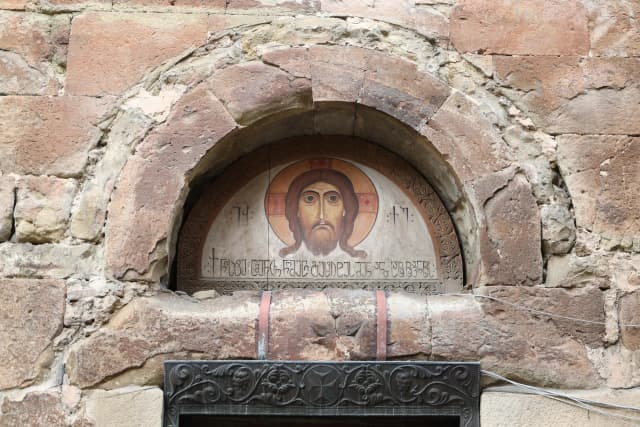
Anchiskhati Basilica of St Mary
Shavteli Street, Kala, Ortachala, Krtsanisi District, Tbilisi, 0108, Georgia
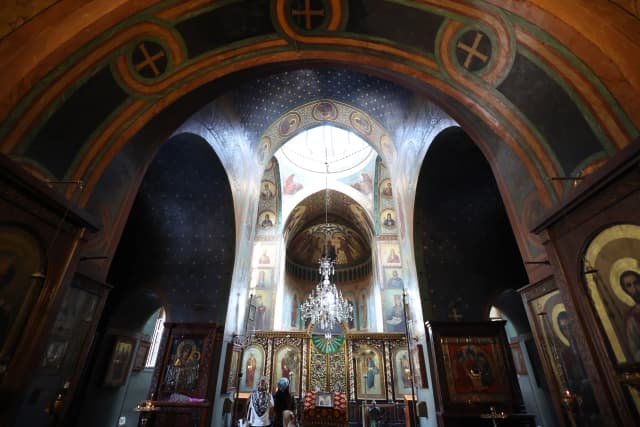
Old Holy Trinity Church
Grigol Abashidze Street, Garetubani, Mtatsminda, Sololaki, Mtatsminda District, Tbilisi, 0108, Georgia
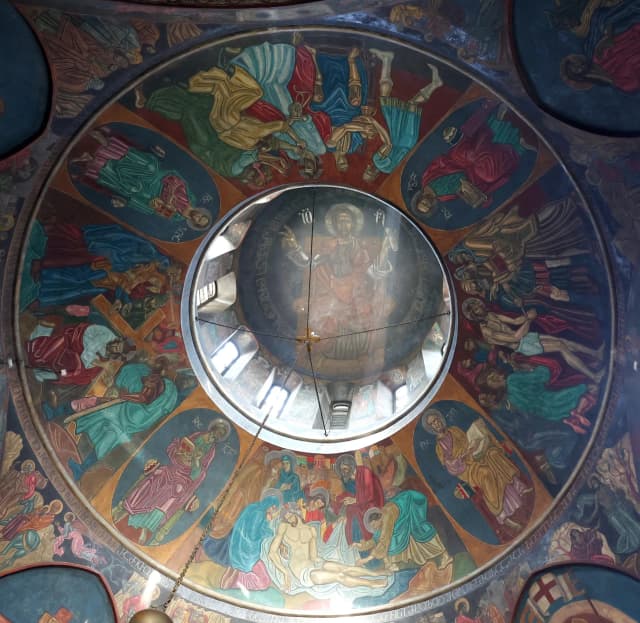
Didube Church of Mother of the God
Didube Pantheon, Didube, Didube District, Tbilisi, Georgia
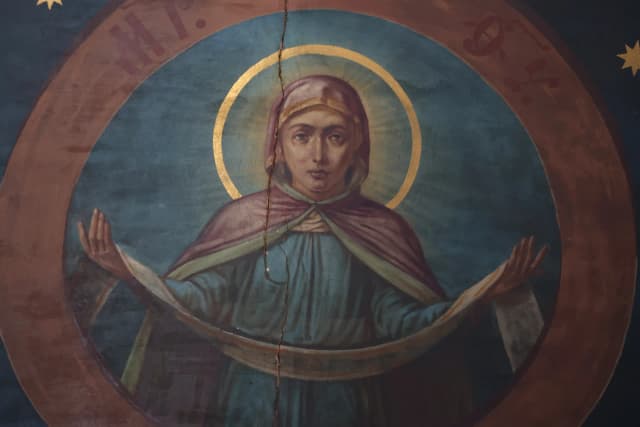
Mtatsminda Father David Church
Mama Daviti Rise, Mtatsminda, Sololaki, Mtatsminda District, Tbilisi, 0108, Georgia
Saint Nicholas Church in Narikala
Narikala, Gomi 1st Lane, Betlemi, Kala, Ortachala, Krtsanisi District, Tbilisi, 0108, Georgia
Samtavro Monastery of St. Nino
Samtavro Monastery of Saint Nino, Mirian Mepe Street, Mtskheta, Mtskheta Municipality, Mtskheta-Mtianeti, 3311, Georgia
Cathedral of Saint Mary of Zion
სიონი
Kashveti St. George Church
9 Shota Rustaveli Ave